

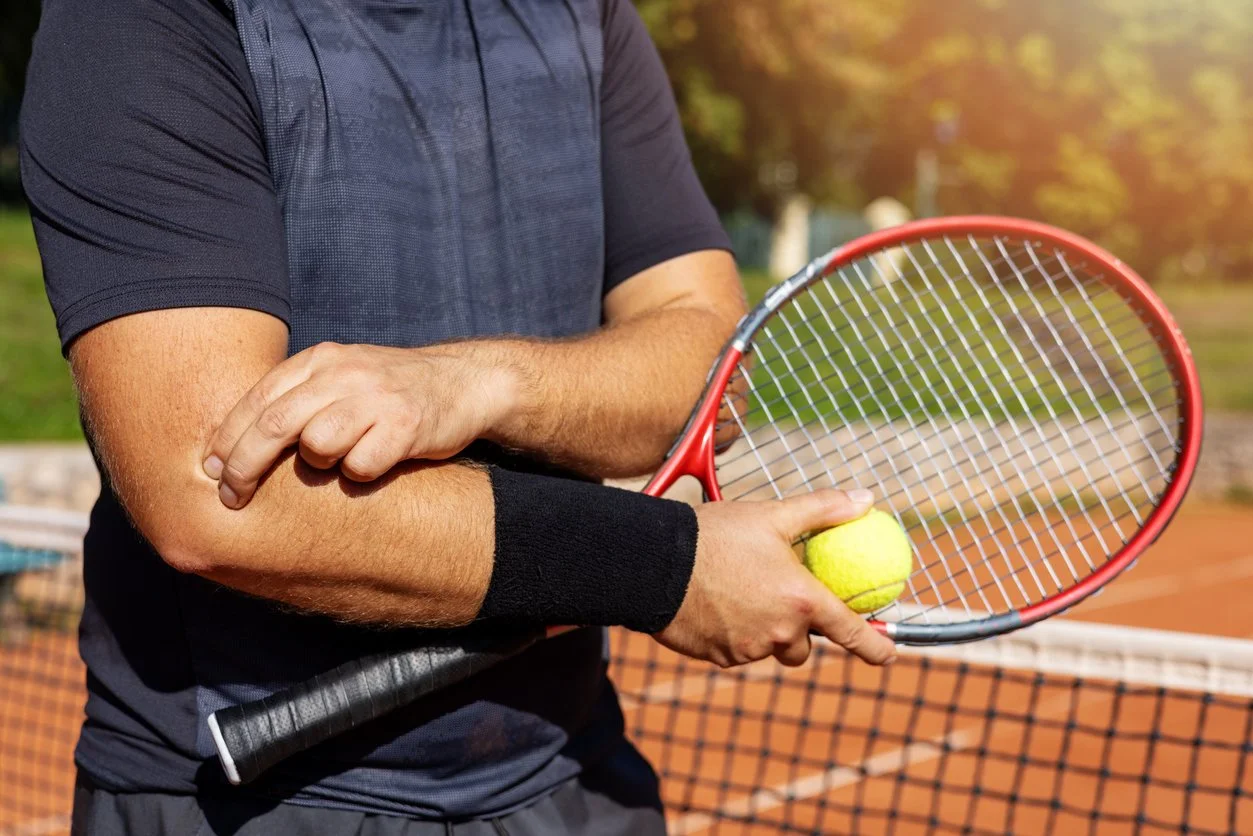
Get quick and easy treatment for Tennis Elbow (lateral epicondylitis)
Tennis Elbow (Lateral Epicondylitis) Treatment for Men
Tennis elbow can make gripping, lifting, or even using a mouse feel surprisingly painful. The right care plan, though, usually brings steady relief without surgery. At Sabuche Health, tennis elbow is evaluated and treated through convenient men’s telehealth visits, helping you get back to work, workouts, and hobbies with a clear, step‑by‑step plan.
What is tennis elbow?
Tennis elbow (lateral epicondylitis) is a tendon problem on the outer side of the elbow where the forearm extensor tendons attach to the bone. Small tears and irritation build up over time from repeated gripping, lifting, or wrist‑extension motions.
Despite the name, most people with tennis elbow do not play tennis. Many men develop it from work tasks, tools, weightlifting, or repetitive computer and mouse use. It often affects the dominant arm and can become stubborn if ignored.
Common symptoms
The hallmark symptom of tennis elbow is pain or burning on the outer (lateral) side of your elbow. The area is usually most tender right over the bony bump or up to a couple of centimeters below it.
You may notice pain when gripping objects, lifting something with your palm facing down, shaking hands, or pouring from a container. Some men notice weakness when extending the wrist against resistance, like when lifting a pan or dumbbell. Symptoms often start gradually and worsen over weeks or months.
Why does tennis elbow happen?
Tennis elbow develops when the tendon that helps extend your wrist and fingers is overloaded. Repetitive or forceful gripping and lifting cause micro‑tears in the tendon, especially where it attaches to the bone on the outside of the elbow.
Over time, the tendon becomes irritated and less able to handle stress. Risk factors include repetitive manual work, frequent tool use, racquet sports, heavy lifting, and poor form with weight training. Without rest and rehab, pain can become a chronic problem.
How Sabuche Health evaluates tennis elbow
During a telehealth visit, your clinician will take a detailed history and, with your help, perform a focused virtual exam. You may be asked:
Where exactly is your pain located?
What activities make it worse or better?
How long has it been going on, and did it start after any new activity or injury?
Does it affect grip strength, work tasks, or workouts?
You might be guided through simple self‑tests, such as pressing the back of your hand against your other hand or lifting a light object while noticing where the pain is. Many cases of tennis elbow can be diagnosed clinically without any imaging.
If your symptoms are atypical or severe, or if there is concern for another condition such as radial tunnel syndrome, nerve issues, or arthritis, your clinician may recommend an in‑person evaluation or imaging in your local area.
Conditions that can mimic tennis elbow
Not all outer elbow pain is tennis elbow. Other causes can include:
Radial tunnel syndrome (nerve compression causing pain in a similar area)
Arthritis or joint problems in the elbow
Referred pain from the neck or shoulder
Your Sabuche Health provider will ask specific questions and may guide you through movements to help distinguish these conditions. If a nerve problem or other serious issue is suspected, you may be referred for in‑person follow‑up.
At‑home care and activity changes
The first step in treating tennis elbow is reducing stress on the irritated tendon. This usually means:
Avoiding or cutting back on repetitive gripping and lifting with the palm down
Modifying work tasks, tools, or lifting techniques
Taking short breaks during repetitive activities
Ice packs, used a few times a day, can help with pain, especially after activity. Over‑the‑counter anti‑inflammatory medications may also help when safe for you. Your telehealth clinician can advise you on safe use and alternative options if you cannot take these medicines.
Bracing and support
Certain braces can reduce strain on the tendon and help you stay functional while healing. These may include:
A counterforce strap worn around the forearm, just below the elbow
A wrist brace, in some cases, limits painful wrist extension during certain tasks
Your Sabuche Health clinician can recommend what type of brace to try, how to position it, and when to wear it. The goal is not to rely on a brace forever, but to use it as a tool while your tendon heals and you build strength.
Stretching and strengthening exercises
Rehab exercises are essential for long‑term recovery from tennis elbow. A typical program includes:
Gentle stretching of the forearm extensor muscles to reduce tension
Eccentric strengthening exercises, where you slowly lower the wrist against resistance
Gradual progression of load over time to rebuild tendon resilience
Your clinician can provide a simple home exercise program or recommend physical therapy if needed. Doing the exercises consistently, even after pain improves, helps reduce the chance of symptoms returning.
Medications and other treatments
Medication choices depend on your health history and other prescriptions. Options may include:
Short‑term anti‑inflammatory medications by mouth or as a topical gel
Other pain‑modulating medications in select cases
Advice on safe use and when to avoid certain drugs
If pain remains severe despite several weeks to months of good conservative care, advanced treatments such as injections or other procedures may be considered in partnership with a local specialist. Your Sabuche Health provider can explain these options and help you decide what makes sense.
When surgery is considered
Most cases of tennis elbow improve with non‑surgical treatment, including rest, bracing, and rehab exercises. Surgery is rarely needed and is usually only considered when:
Pain has persisted for many months despite well‑done conservative care
Pain significantly limits work, sports, or daily activities
Imaging and exam suggest ongoing tendon damage that is unlikely to improve on its own
If surgery is on the table, your telehealth clinician can help you understand what it involves, what to expect from recovery, and how to choose a local surgeon.
Why men choose Sabuche Health
Sabuche Health focuses on men’s health and understands how pain and lost function affect work, family, and identity. With Sabuche Health, you get:
Private, convenient telehealth visits from home
Clinicians experienced in musculoskeletal and men’s health issues
Clear explanations in plain language, without rushing or judgment
When to schedule a telehealth visit for tennis elbow
Consider scheduling a Sabuche Health telehealth visit if:
Elbow pain on the outer side has lasted more than a couple of weeks
Pain is limiting your workouts, grip strength, or ability to do your job
Home care has not helped, or you are not sure what exercises or braces to use
You want a clear, step‑by‑step plan tailored to your life and activities
You do not have to guess, push through the pain, or stop the activities you enjoy forever. With the right strategy, tennis elbow usually improves.
Ready to move toward less pain and better function? Click the “BOOK NOW” button below to schedule your appointment today.