

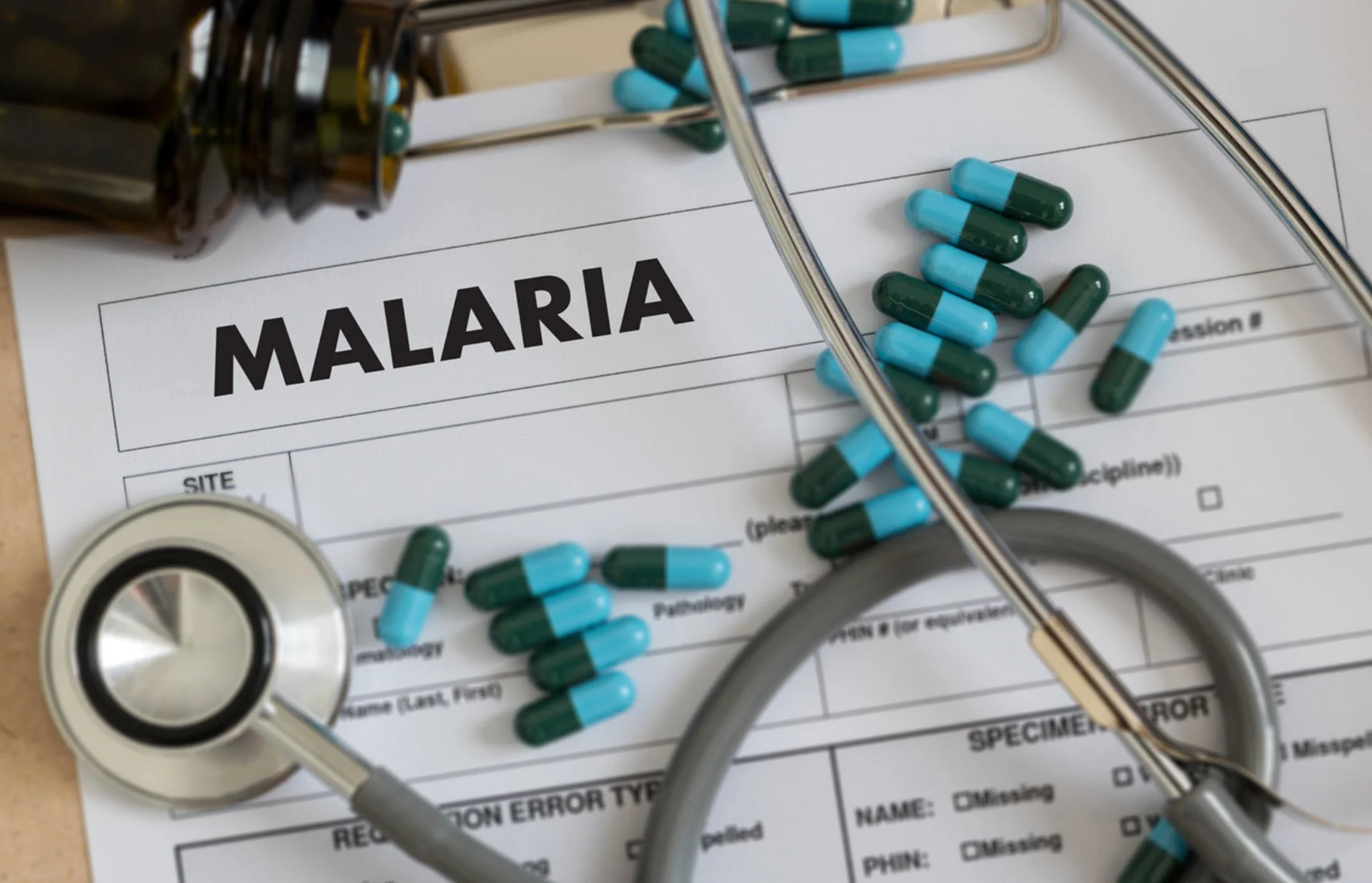
Get malaria prevention medication quickly & conveniently
Malaria prevention medication helps stop malaria parasites from taking hold in your body when you travel to areas where malaria is common. When you combine the right malaria prevention medication with mosquito protection and a simple telehealth plan, your risk of getting seriously ill drops.
What is malaria?
Malaria is a serious infection spread by mosquito bites in many parts of Africa, Asia, Central and South America, and some island regions. A single infected bite can cause high fever, chills, body aches, and, in some cases, life‑threatening illness.
Malaria is caused by parasites that enter your bloodstream through the bite of an infected mosquito.
Symptoms can appear while you are traveling or up to one year after you return home, so it is important to mention recent travel if you feel sick.
What is malaria prevention medication?
Malaria prevention medication, also called chemoprophylaxis, means taking pills before, during, and after travel to stop malaria from growing in your blood. These medicines do not replace mosquito bite prevention, but together they provide strong protection.
The most commonly used malaria prevention medications for travelers are atovaquone‑proguanil, doxycycline, mefloquine, and, in some regions, chloroquine or hydroxychloroquine.
Your medication choice depends on where you are going, how long you will stay, your medical history, and any drugs you already take.
Common malaria prevention medications
This section gives a plain‑language overview of the main malaria prevention medications you may discuss during your $65 telehealth visit.
Atovaquone‑proguanil (often first choice)
Atovaquone‑proguanil (generic Malarone) is a daily tablet used by many short‑term travelers because it is usually easy to tolerate.
You usually start 1–2 days before entering a malaria area, take it every day while there, and continue for 7 days after you leave.
Common side effects can include stomach pain, nausea, diarrhea, headache, vivid dreams, or itching, but many people tolerate it well.
It is not used for prevention in people with severe kidney disease, and it may not be right if you are pregnant or breastfeeding a very small infant.
Doxycycline
Doxycycline is an antibiotic that also prevents malaria and is taken once a day.
You start 1–2 days before travel, take it every day while in the risk area, and continue for 4 weeks after leaving.
Side effects can include sun sensitivity, stomach upset, and, for some people, yeast infections.
Doxycycline is usually not used in pregnancy or in very young children because of its effects on teeth and bones.
Mefloquine
Mefloquine is a once‑weekly malaria prevention medication used for some travelers, especially on longer trips, when other options are not suitable.
You start at least 2 weeks before travel, so any side effects appear before you go, then take it once a week during your trip and for 4 weeks after.
It can cause dizziness, vivid dreams, or mood and sleep changes, so it is not recommended for people with certain mental health or seizure histories.
Chloroquine or hydroxychloroquine
Chloroquine or hydroxychloroquine is used only in a few areas where malaria parasites are still sensitive to this older drug.
These medications are taken once a week, starting 1–2 weeks before travel, through your trip, and for 4 weeks after you leave.
Many regions now have chloroquine‑resistant malaria, so these options are less common for modern international travel.
How your telehealth visit works
With Sabuche Health, your malaria prevention medication plan is handled online in a simple, step‑by‑step visit for a flat $65 self‑pay fee.
You complete a brief online intake form about your trip dates, destinations, and medical history. This helps your provider match you with the safest and most effective medication.
During your secure video visit, your clinician reviews your travel plans, any chronic conditions, and your current medications, then recommends a malaria prevention medication and dosing schedule.
If appropriate, a prescription is sent to your preferred pharmacy, often the same day, so you can start pills on time before your flight.
Book a $65 telehealth visit today so there is enough time to choose the right malaria prevention medication and begin it before you enter a malaria risk area.
Using your medication the right way
To get the most protection from malaria prevention medication, it is important to follow the schedule exactly as prescribed.
Start on the date your provider recommends, which may be 1–2 days or up to 2 weeks before you reach a risk area, depending on the drug.
Take your pill at the same time each day (or each week) and finish every dose after you return home, even if you feel well.
If you vomit within one hour after taking atovaquone‑proguanil, you may need to repeat that dose and contact your provider for guidance if it keeps happening.
If you miss a dose, take it as soon as you remember, unless it is almost time for the next dose; do not double up unless a clinician tells you to.
No malaria prevention medication is 100% effective, so you still need strong mosquito protection.
Bite prevention: your second layer of defense
Even when you use malaria prevention medication, smart mosquito avoidance helps close the remaining risk gap.
Use an insect repellent on exposed skin that is proven to work against mosquitoes, such as products with DEET, picaridin, IR3535, oil of lemon eucalyptus, PMD, or 2‑undecanone.
Wear loose‑fitting, long‑sleeved shirts, long pants, and socks, especially from dusk to dawn when malaria‑carrying mosquitoes tend to bite.
Sleep in air‑conditioned or well‑screened rooms, or under an insecticide‑treated bed net when needed.
Treat clothing and gear with permethrin spray, but never apply permethrin directly to your skin.
Using both malaria prevention medication and good bite protection together offers much stronger protection than using either strategy alone.
When to seek urgent care
Malaria is always serious, and fast treatment can save your life. Even if you took malaria prevention medication exactly as prescribed, you must act quickly if you feel ill.
If you get a fever, chills, flu‑like symptoms, or severe fatigue during your trip or within one year after you return, seek medical care right away and tell the clinician you traveled to a malaria area.
Go to an emergency department immediately for high fever, confusion, trouble breathing, yellow skin or eyes, or if you feel very sick and cannot keep down fluids or medicine.
Book your $65 telehealth visit
Sabuche Health offers fast, judgment‑free malaria prevention medication visits for adult travelers, all done online for a flat $65 with no insurance required.
You get a personalized malaria prevention medication plan matched to your destination, health history, and schedule.
Your visit is private, convenient, and designed to keep you healthy so you can focus on your trip instead of worrying about malaria.
Book a $65 telehealth visit now to choose the right malaria prevention medication, get your prescription in time, and travel with confidence.