

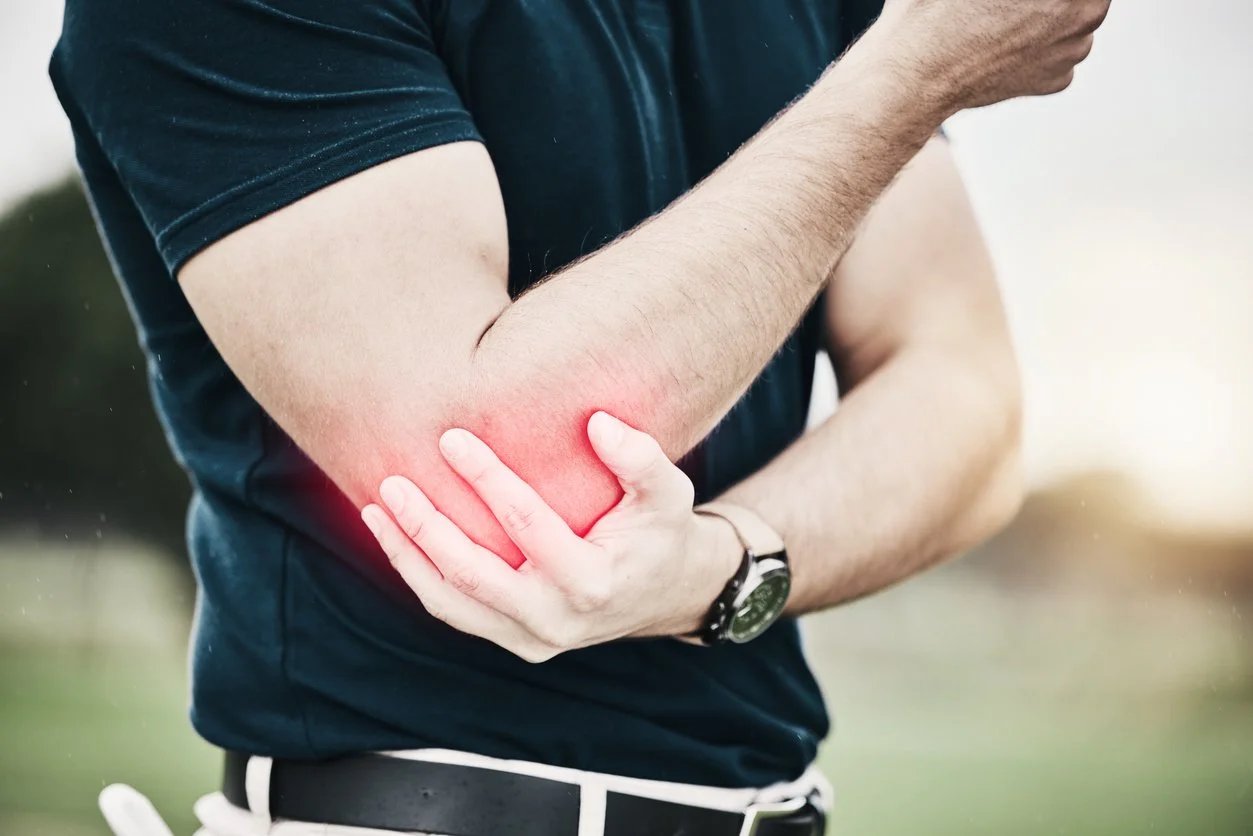
Get quick and easy treatment for elbow pain (golfer’s elbow)
Elbow Pain (Golfer’s Elbow) Treatment for Men
Elbow pain from golfer’s elbow can make simple things like lifting a bag, typing, or swinging a golf club feel impossible. The good news is that most men can improve with the right plan, often without surgery. At Sabuche Health, golfer’s elbow is evaluated and treated through convenient men’s telehealth visits, so you can start feeling better without waiting weeks for an in‑person appointment.
What is golfer’s elbow?
Golfer’s elbow (medial epicondylitis) is a type of tendon problem that causes pain on the inner side of your elbow where the forearm tendons attach to the bone. It develops when these tendons become irritated or damaged from repeated stress.
Despite the name, you do not need to play golf to get golfer’s elbow. Many men develop it from work tasks, weightlifting, home projects, or computer use. It often affects the dominant arm and is especially common between the ages of 30 and 60.
Common symptoms
Many men notice a dull ache or sharp pain on the inner side of the elbow that may spread into the forearm or wrist. The pain often worsens with gripping, lifting, shaking hands, or bending the wrist, and it may feel stiff or sore first thing in the morning.
Other symptoms can include weaker grip strength, tenderness just in front of and below the bony bump on the inside of the elbow, and sometimes mild swelling or warmth in that area. Some men also feel pain when pushing against resistance, like when pouring from a heavy container or turning a doorknob.
Why does golfer’s elbow happen?
Golfer’s elbow develops when the tendon on the inside of the elbow is overloaded, and small tendon fibers begin to break down. Repeated wrist bending, forearm rotation, and gripping put ongoing stress on this tendon, especially when there is not enough rest.
Risk factors include jobs or hobbies that require forceful gripping, lifting heavy objects regularly, or long periods of using tools or equipment that vibrate. Smoking, excess weight, and poor technique in sports or lifting can also increase the chance of persistent elbow pain.
How Sabuche Health evaluates elbow pain
During your Sabuche Health telehealth visit, a men’s health clinician reviews your symptoms, work and activity history, and any previous injuries. You may be guided through simple movement tests, such as pressing your hand against your other hand or moving the wrist in certain directions, to localize the pain.
Most golfer’s elbow cases are diagnosed based on your story and a guided exam. Imaging, like X‑rays or MRI, is not usually needed at first. If your symptoms are severe, unusual, or not improving as expected, you may be referred for in‑person evaluation or imaging in your local area.
To learn more about how care works at Sabuche Health, you can visit the main services page at https://www.sabuchehealth.com.
Conditions that can mimic golfer’s elbow
Elbow pain is not always golfer’s elbow. Ruling out other causes is important for a safe and effective plan. Other possible causes include:
A pinched nerve in the neck that sends pain down the arm
Irritation of the ulnar nerve at the elbow, causing numbness in the ring and little fingers
Arthritis or joint problems within the elbow itself
Your Sabuche Health provider will ask targeted questions about numbness, tingling, weakness, or neck pain, and may recommend in‑person follow‑up if any warning signs are present.
At‑home care and activity changes
The first step in treating golfer’s elbow is giving the irritated tendon a chance to heal. This usually means reducing or pausing the activities that reliably trigger your pain, such as heavy gripping, repetitive wrist bending, or certain lifts.
Short‑term use of ice packs and over‑the‑counter anti‑inflammatory medications can help with pain and swelling for many men. Your Sabuche Health clinician may suggest a topical anti‑inflammatory gel or an oral medication when safe for you, and will review important heart, stomach, and kidney safety points before starting any prescription.
Bracing and splinting options
Some men benefit from a counterforce elbow strap worn just below the tender area when they need to use the arm for work or daily tasks. This type of brace can reduce tension on the tendon and make painful activities more manageable while healing.
In more stubborn cases, a wrist “cock‑up” splint worn at night or during certain activities can reduce strain on the flexor tendons. Your telehealth provider can recommend specific brace types, how tightly to wear them, and how long to use them each day based on your symptoms and your daily routine.
Stretching and strengthening
Targeted exercises are a key part of long‑term recovery from golfer’s elbow. These often include:
Gentle stretching of the wrist flexors and forearm muscles to restore a comfortable range of motion
Slow, controlled strengthening exercises for the wrist flexors using light weights or special resistance bars to rebuild tendon strength
Your Sabuche Health clinician can provide a simple home exercise program or refer you to in‑person physical therapy if needed. With consistent stretching and strengthening, along with activity changes, many men notice real improvement over a few months.
Medications and injections
Medication plans at Sabuche Health are tailored to your medical history, other prescriptions, and risk factors. Options can include short-term anti-inflammatory medications, topical gels, and adjustments to any pain medications you are already taking.
In some stubborn cases, local injections such as corticosteroids or other procedures may be considered to reduce pain. These are usually arranged with an in‑person specialist. Your Sabuche Health provider can explain the pros and cons of injections and guide you toward appropriate local care if this becomes necessary.
When surgery is considered
Most golfer’s elbow cases improve with non‑surgical care, including rest, therapy, bracing, and medications. Surgery is usually reserved for men who still have significant pain and limitations after several months of consistent conservative treatment.
If surgery is needed, it often involves removing damaged tendon tissue and encouraging healing at the attachment site, followed by a structured rehab program. Your Sabuche Health clinician can coordinate with local orthopedic or sports medicine providers and continue to support you before and after any procedure.
Why men choose Sabuche Health
Sabuche Health focuses on men’s health and understands how joint pain affects work, family, and performance. You meet with an experienced clinician through secure video, from the privacy and comfort of your home.
Because Sabuche Health is independently owned and not part of a large corporate chain, visits are more personal and less rushed. There is time to discuss your diagnosis, treatment options, and realistic recovery timeline. The service currently supports men in several states, with clear instructions on how to get started online.
To learn more about other conditions managed by Sabuche Health, including joint pain and other men’s health issues, visit https://www.sabuchehealth.com.
When to schedule a telehealth visit
You should consider scheduling a Sabuche Health telehealth visit if:
Elbow pain has lasted more than a couple of weeks or keeps coming back when you return to activity
Pain limits your grip strength, work duties, workouts, or hobbies, or you notice morning stiffness and tenderness over the inner elbow
You are unsure whether your pain is golfer’s elbow, a nerve issue, or something else, and want a clear diagnosis and plan
Waiting too long can allow tendon irritation to become a long‑term problem that takes longer to heal and can affect your strength and motion. Early care usually means simpler treatment, faster progress, and less time away from the activities that matter to you.
If you are ready to take the next step toward healing your elbow pain, click on the “BOOK NOW” button below to schedule your men’s telehealth appointment today.